Green Roofing Solutions for Sustainable Commercial Buildings in Manchester
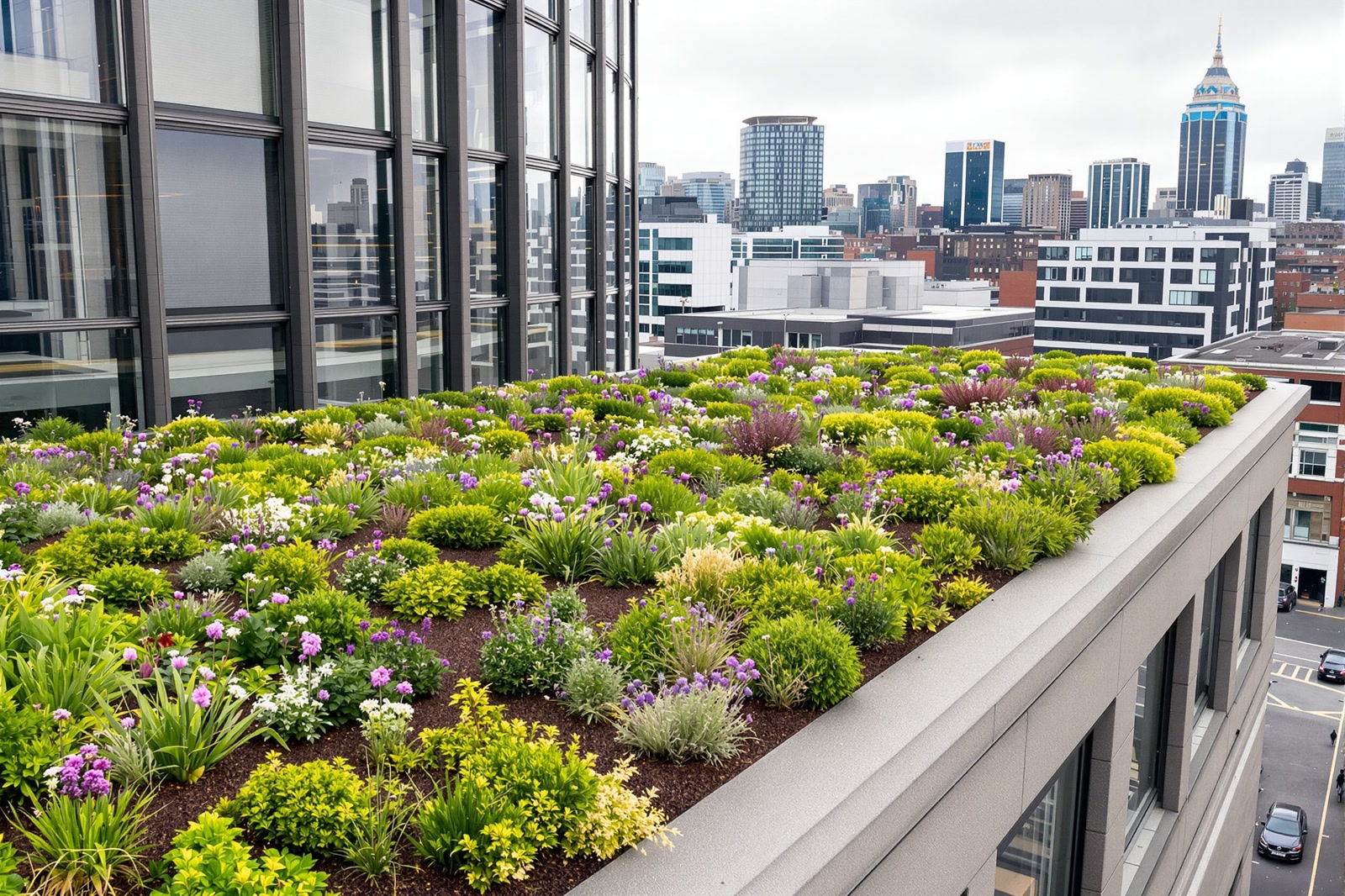
What Is a Green Roof?
A green roof, also known as a living roof or eco-roof, is a roof surface partially or completely covered with vegetation planted over a waterproof membrane. Green roofs range from extensive systems, featuring lightweight sedum matting and requiring minimal maintenance, to intensive systems that support full gardens, trees, and even recreational spaces. For Manchester commercial buildings, extensive green roofs are the most practical and popular option.
Stormwater Management in Manchester's Wet Climate
Manchester receives significantly more rainfall than the UK average, and urban runoff puts immense pressure on the city's drainage infrastructure. Green roofs absorb up to 80% of rainfall during summer storms, slowly releasing it through evaporation and transpiration rather than channelling it immediately into overloaded drains. For commercial properties in flood-prone areas like Salford and parts of the city centre, this stormwater retention capability is a major advantage.
Energy Efficiency and Thermal Performance
Green roofs provide natural insulation, reducing heat loss in winter and heat gain in summer. Studies show that buildings with green roofs can reduce cooling energy demand by up to 75% in summer months. In Manchester, where heating dominates energy costs, the winter insulation benefit is equally valuable. A well-designed green roof can improve a building's thermal performance enough to contribute towards EPC rating improvements.
Urban Heat Island Mitigation
Manchester's dense urban areas suffer from the heat island effect, where concrete and asphalt surfaces absorb and retain heat, raising local temperatures by several degrees. Green roofs counteract this by evaporative cooling, reducing ambient air temperature around the building. As Manchester pursues its ambition to become a zero-carbon city by 2038, green roofs are becoming a planning requirement for many new commercial developments.
Biodiversity and Wildlife Habitat
Green roofs create valuable habitat for pollinators, birds, and invertebrates in Manchester's heavily urbanised landscape. A sedum green roof can support over 100 species of insects and provide foraging ground for bees, a fitting benefit for a company named after Manchester's iconic worker bee. Many Manchester businesses now include biodiversity statements in their corporate social responsibility reports, and green roofs deliver measurable ecological value.
Roof Lifespan Extension
Perhaps surprisingly, green roofs protect and extend the life of the underlying waterproof membrane. The vegetation layer shields the membrane from UV radiation, temperature extremes, and physical damage. Waterproof layers beneath green roofs typically last twice as long as exposed membranes, effectively paying back a significant portion of the green roof installation cost through deferred replacement.
Structural Considerations for Manchester Buildings
Green roofs add weight, typically 60 to 150 kg per square metre when saturated. Before installing a green roof on an existing Manchester commercial building, a structural engineer must assess the load-bearing capacity. For new builds, green roof specifications can be incorporated into the original design. Flat roofs with gentle falls are ideal, and drainage outlets must be carefully designed to prevent root penetration and waterlogging.
Grants and Incentives Available
Manchester City Council and Greater Manchester Combined Authority offer various sustainability grants that can offset green roof installation costs. Additionally, green roofs contribute towards BREEAM and LEED accreditation, which can increase property values and attract environmentally conscious tenants. For developers and landlords, the business case for green roofs has never been stronger.
Need Professional Roofing Advice?
Our team of Manchester roofing specialists is ready to help with your commercial roofing project, large or small.
Get a Free Quote