7 Warning Signs Your Commercial Roof Needs Repair in Manchester's Climate
Manchester's Weather Is Hard on Roofs
With over 150 rainy days per year, frequent high winds, and occasional hailstorms sweeping down from the Peak District, Manchester's climate is one of the toughest tests for commercial roofing in the UK. The combination of moisture, temperature fluctuations, and wind uplift creates a perfect storm for roof degradation. Ignoring the warning signs can turn a £500 repair into a £50,000 replacement.
1. Water Stains on Ceilings and Walls
The most obvious sign of roof trouble is water appearing inside your building. Brown or yellow stains on ceiling tiles, damp patches on upper walls, or blistering paint all indicate that water is finding its way through the roof covering. Even small stains should not be ignored, as they suggest an active leak that will worsen with every rainfall.
2. Sagging or Deformed Roof Deck
From the ground, look up at your roofline. Any visible sagging, waviness, or dips in the surface suggest the roof deck is compromised. This could be due to waterlogged insulation, rotted timber, or failed structural supports. A deformed roof deck is a structural safety issue that requires immediate professional assessment.
3. Damaged or Missing Flashings
Flashings are the metal or membrane strips that seal joints, edges, and penetrations on your roof. High winds common in Manchester can lift, crease, or tear flashings, breaking the waterproof seal. Inspect the edges of your roof, around skylights, vents, and chimneys for any signs of damage or separation.
4. Excessive Moss and Vegetation Growth
Moss thrives in Manchester's damp climate, and while a small amount is normal, thick moss mats trap moisture against the roof surface. Over time, this moisture degrades the waterproof layer and can cause root penetration on older felt roofs. Vegetation growth in gutters or along seams is another sign that water is lingering where it should not be.
5. Increased Energy Bills
A sudden spike in heating costs during winter or cooling costs during summer can indicate that your roof insulation is wet or compromised. Waterlogged insulation loses its thermal performance, forcing your HVAC system to work harder. If your energy bills are climbing and your roof is over 10 years old, a roof survey should be your next step.
6. Cracked or Missing Roof Membrane
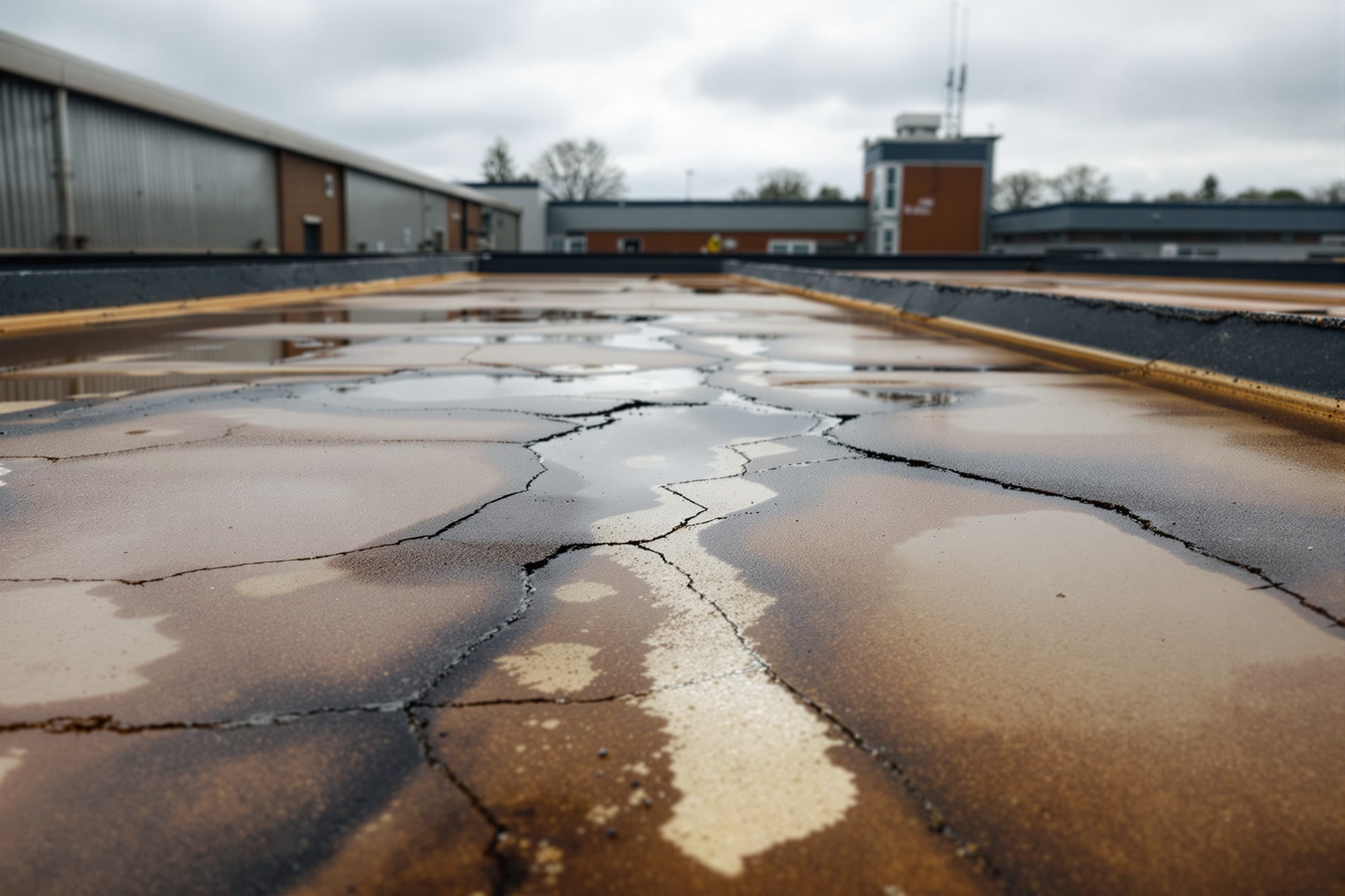
Walk the roof, or have a professional do so, and look for cracks, splits, punctures, or areas where the membrane has lifted or blown away. UV exposure, even in Manchester's overcast conditions, gradually degrades rubber and felt membranes. Once the waterproof barrier is breached, leaks are inevitable.
7. Blocked or Overflowing Gutters
Gutters that overflow during rainfall, or downpipes that gush water rather than channelling it away, indicate blockages that are backing water up onto the roof edge. This standing water accelerates the deterioration of fascia boards, soffits, and the bottom edge of the roof membrane. It is one of the easiest problems to fix, but one of the most damaging if ignored.
Act Fast, Save Money
The key to affordable commercial roof maintenance is speed. A minor repair caught early costs a fraction of emergency leak remediation or full roof replacement. If you spot any of these warning signs on your Manchester commercial property, contact a professional roofing contractor for a comprehensive survey and repair plan.
Need Professional Roofing Advice?
Our team of Manchester roofing specialists is ready to help with your commercial roofing project, large or small.
Get a Free Quote